Studio News: Q1 2026—DILIM Press
I met Nikki Flores, the founder of DILIM Press, an independent press that highlights writing by Philippines-based and Filipino diaspora writers, on Instagram. Through a series of exchanges and DMs, I also became a member of a Filipino-American writer’s group Kudlit Kulitan. If this had happened a decade ago, I would say I met her by happenstance, but now it’s just the algorithm working its dark magic.
The word dilim means darkness. A related word, rilim, means shade. When I was exploring the press’s website, I thought it would be a perfect home for my work, which talks about things that are hidden in plain sight— under the shade of a balete tree one hot afternoon.
DILIM focuses on noir and magical realism, tropical gothic in other words, and my recent work Iridescence caught Nikki’s eye. In a year or so, a short story I wrote in relation to another work, I am a wound shrouded in devotion, will be published in the first anthology, Galleon Dreaming, which will be about mysteries and myths surrounding the Manila-Acapulco Galleon Trade (1565 - 1815), which connected the Philippines culturally and economically to the Americas, especially Mexico, and was the lucrative lifeline for the Spanish Empire.
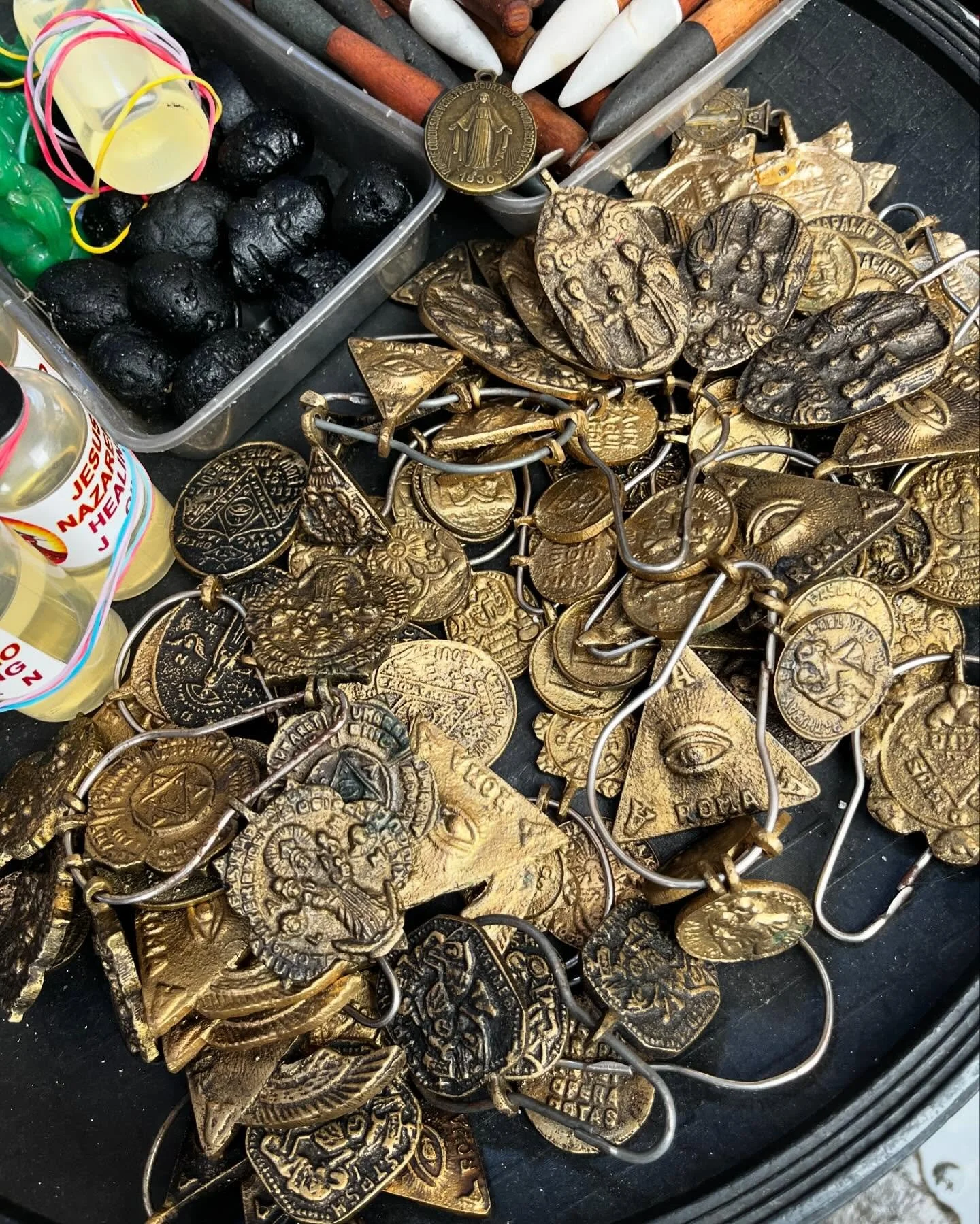
Talismans locally known as anting-anting sold outside Quiapo Church in Manila.
In relation to the upcoming anthology, DILIM has been highlighting writers from the Philippines and Filipino diaspora on its website, my writer statement being a part of it. Writing about my writing was something that used to thrill me when I was a younger writer, full of indulgence and selfish because I had a blatant disregard for my readers. It’s not a unique trait, making art and expressing oneself through writing can and will be treated as masturbatory. These days, the inquiry on why I write, how and what produces in me a feeling of confusion and panic that comes out as bravado and waxing poetic without really saying or meaning anything. So, when I was writing my statement for DILIM, as a means of introducing myself to this new community of diaspora writers in the States, I tried to be a lean as possible. And, for me, the main inspiration for my writing is my interactions with people, listening to them and sharing stories and spaces with them.
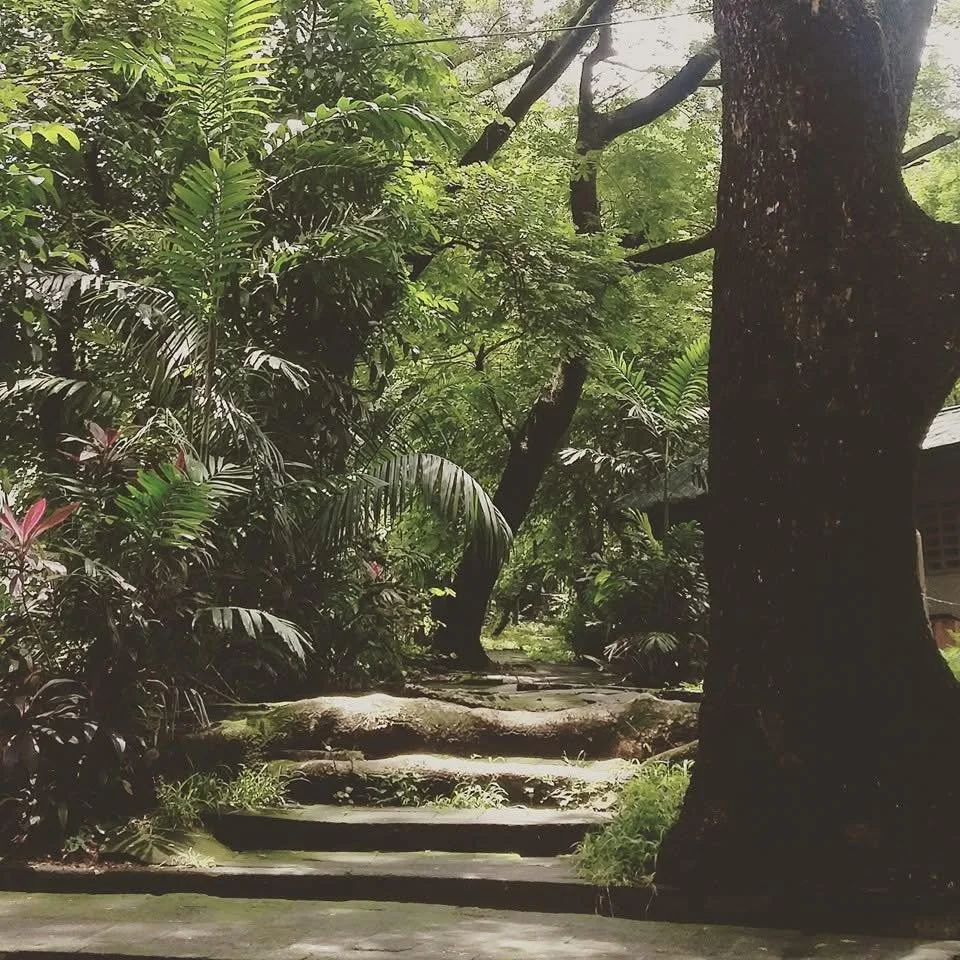
The old hangout place when I was in college at the University of the Philippines. This place, along with the beloved Faculty Center, no longer exists. A decade after it was destroyed in a fire, the College of Arts and Letters remains without an address in spite of its numerous contributions to the U.P.’s global rankings.
I say this in the driest, most honest way possible: being able to understand people—how they act and why—is where I mainly draw my inspiration. I think, as part of having been a selfish and indulgent writer (and who’s to say I no longer am not?), I treated people and situations as abstract entities, puzzles to be solved or problems to overcome. It was about control and domination instead of understanding and empathy. These days, it’s less about me and my ego, and more about preserving memories of Manila and the Philippines that is slowly fading away or no longer exists. Because generally the world is becoming shittier, and because I chose to live in the States, far from home. I have now become a diaspora writer, a title which I resisted for some time. But now that’s just a fact.
It’s been roughly twenty-one years and I’m still writing. I continue to produce stories and consume them. Having moved to the United States, I am now what is considered a diaspora writer.
My feelings towards writing haven’t changed though my motives have. It’s less about self-expression and the desire to be perceived in a specific way (a side-glance filled with longing), and more about creating a reference to a life and world that is either fading away or no longer exists.
Explore DILIM Press’s website and read the rest of my current writing statement here.